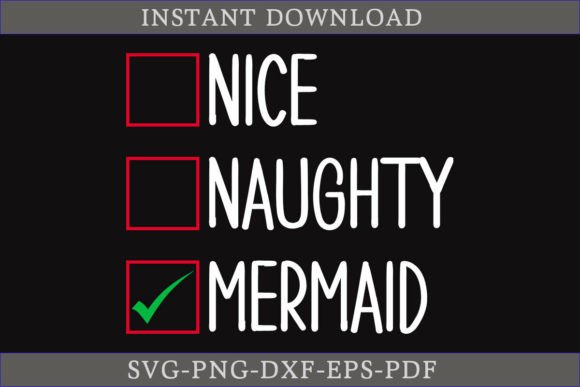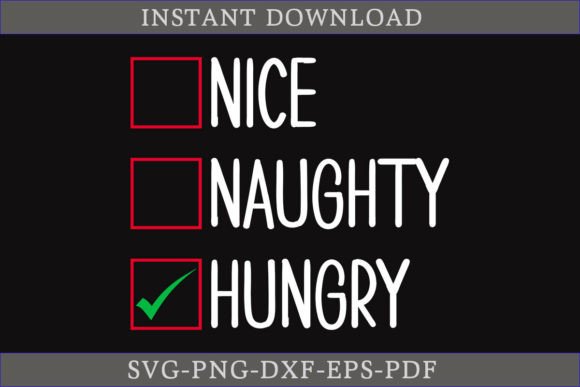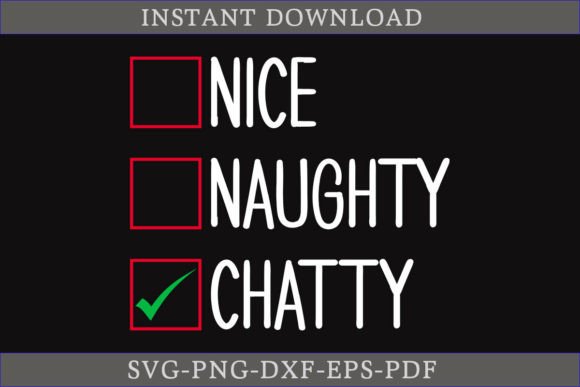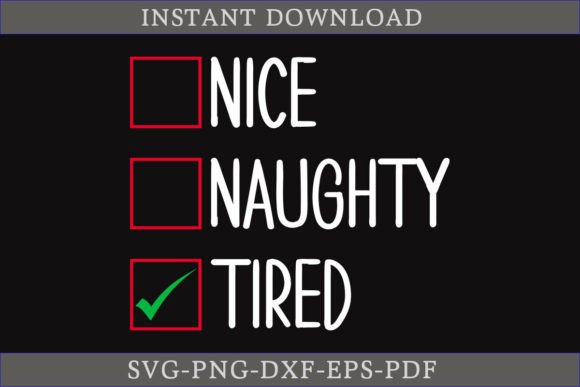
Nice Naughty Tired Christmas SVG Shirt
There is something immediately relatable about this design. The moment I opened the zip file and saw the SVG, I recognized the kind of humor that sells well in the handmade market. It is cheeky without being offensive, tired without being gloomy, and festive without falling into the same old clichés we see every December. As someone who reviews embroidery files before they ever touch a hoop, I look for designs that have a clear emotional hook. This one lands it.
The layout is straightforward, which I appreciate. The lettering carries the personality, and the overall composition feels balanced for a shirt or tote placement. It is not overly detailed, which is a good sign for machine embroidery design. When a design has too many fine lines or tiny flourishes, it can get lost in the stitches. Here, the shapes are bold enough to hold their own after digitizing. The mood is playful and a little sarcastic, the kind of thing people buy for themselves or as a gag gift for someone who needs a laugh during the holiday rush. From a graphic design standpoint, the SVG format gives me flexibility. I can scale it, tweak colors, or adjust spacing before converting to an embroidery file. That is a huge advantage when you are working with different garment sizes or product types. Whether I am putting it on a toddler onesie or an adult hoodie, the vector format lets me control the outcome.
I tested this design mentally against several common embroidery projects. On a sweatshirt, it reads as a casual statement piece. On a tote bag design, it becomes a conversation starter at a craft fair. On a kitchen towel, it is a quick holiday gift that feels personal. The PNG and PDF versions also make it easy to create printable mockups for Etsy listings, which saves time when I am building a product page for my small shop. The EPS and DXF files add compatibility with different cutting and design software, which is useful if I am layering it with other elements or using it as an applique design. The file formats cover a wide range of workflows, and that kind of compatibility matters when you are running a craft business and need to move quickly between projects.
Real-World Embroidery Performance Across Products
Let me walk through a real scenario I have used this design for. I was preparing a custom embroidered sweatshirt for a small shop owner who wanted a holiday item that stood out from the typical snowflakes and reindeer. She wanted something her customers would actually wear beyond December. We placed the design centered on the chest, using a medium hoop size. The bold lettering stitched out cleanly in a satin stitch with a dark red thread on a heather gray sweatshirt. The contrast was strong, and the design held its shape without puckering. The fill stitch areas were smooth, and the running stitch outlines gave the letters just enough definition to pop at a casual glance. The shop owner sold out of that batch in two weeks. That is the kind of real-world result that tells me a design works.
For a different project, I used it on a tote bag made from heavy cotton canvas. The design held up even better there, partly because the fabric was stable and didn't stretch. I used a tearaway stabilizer and a medium stitch density, and the result was crisp. The humor landed well with customers who wanted a gift for a friend who was already tired of the holiday season before it started. That emotional hook is what makes this design a reliable choice for personalized gifts.
I also tested it on a baby onesie as a gag gift for a new parent. That required scaling the design down significantly, and I had to check the lettering carefully to make sure the curves didn't close up. With a small hoop size like 4x4, the design still worked, but I had to adjust the spacing slightly. That is a good reminder that even a bold design needs a test stitch before you commit to a final product. The design itself is forgiving, but your machine and fabric will always have the final word.
Where to Be Careful With This Design
No design is perfect for every situation, and this one has a few limits worth noting. The lettering relies on clear outlines, so if you are working with a very small hoop size, the details can get cramped. I always recommend testing on scrap fabric first, especially if you plan to scale the design down below two inches. The curves in the lettering need enough space to register clearly in satin stitch or fill stitch. If the spacing is too tight, the thread can blur the edges and make the text harder to read.
Fabric choice matters a lot here. On stretchy knit fabrics like jersey or spandex, the design can distort if the stabilizer is not strong enough. I use a cutaway stabilizer for knits and a tearaway for wovens. If you are stitching on a cap or a curved surface, be extra careful with the lettering curves. The design was not built for curved surfaces, so you may need to flatten the arc or reposition it to avoid distortion. Dark fabrics are another consideration. The design comes as an SVG, so you can change the fill color to white or a light metallic for contrast. But if you are working with black or navy, make sure the thread color pops. A dark green or red thread on a black sweatshirt might not read well from a distance. Test it in black and white mockups first to check the value contrast.
I also advise checking the stitch density before stitching on lightweight fabrics like a thin t-shirt or a satin pillow cover. If the design is too dense, it can pull the fabric or cause tunneling. A light fill stitch or a reduced density setting in your digitizing software can help. And if you are planning to use the design on a product that needs frequent washing, like a tea towel or a baby blanket, make sure the thread colors are colorfast and the stabilizer is fully removed. The design itself is simple enough to hold up well, but the preparation matters.
How This Design Affects Product Value and Customer Trust
From a business perspective, this design fits nicely into the Crafts and Graphics categories. It is versatile enough for both physical products and digital assets. If you are selling finished items, the humor gives you a clear marketing angle. If you are selling the design itself, the multiple file formats make it easy for buyers to use across platforms. The design also has a strong visual appeal at a glance. Customers browsing an Etsy shop or a craft fair table will stop on the phrase because it feels personal and honest. That kind of recognition builds trust and makes the product feel like something they would actually use, not just another holiday decoration.
For a small shop product, this design adds a layer of personality that standard seasonal graphics often lack. It does not try to be elegant or sentimental. It is grounded in a real feeling that a lot of people share during the holidays. That authenticity is what drives buyer engagement and repeat sales. I have found that designs like this one often perform better than purely decorative motifs because they start a conversation. A customer who laughs at the phrase is more likely to buy it as a gift for someone else or even as a treat for themselves. That kind of word-of-mouth promotion is gold for a craft business.
Practical Notes for Embroidery Designers
Before you start stitching, here are a few steps I always take. Test the design on scrap fabric first. Check thread color contrast against your actual garment or product. Review the stitch density in your embroidery software and adjust if needed. Confirm your hoop size can accommodate the design at the scale you want. Inspect small details like tight curves or narrow letter spaces. Test it in black and white mockups to see if the contrast holds up. Compare light and dark fabric backgrounds to make sure the design reads clearly on both. Use a proper stabilizer for your fabric type. Check whether the design works for both personal and commercial projects by reviewing the license terms. The product description does not specify commercial use rights, so I recommend verifying before selling finished items or the digital file itself.
This design is a solid addition to any holiday project lineup. It is not trying to be fancy or overly detailed, and that is exactly why it works for real embroidery work. It is honest, it is funny, and it knows its audience. If you are building a holiday collection for your shop or just need a quick gift design, Nice Naughty Tired Christmas SVG Shirt is worth a closer look. Stitch it out, see how it feels in your hands, and let the design speak for itself.