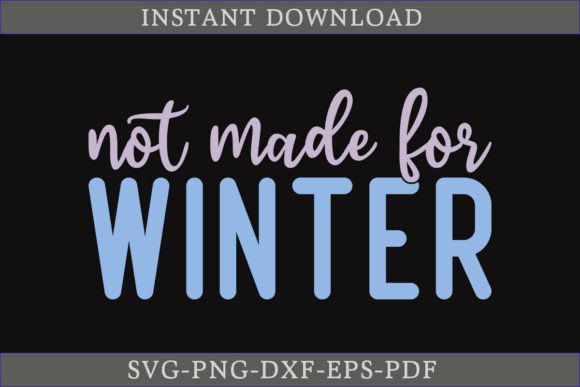
Not Made for Winter Shirt SVG: A Designer Review
When a new embroidery file lands in my inbox, I approach it the same way I approach a new thread color or a fresh roll of stabilizer: with curiosity, a bit of skepticism, and a clear sense of what my customers actually want. The Not Made for Winter Shirt SVG caught my attention because the title alone sparks personality. It is not a generic snowflake or a predictable holiday message. It is a statement piece, the kind of design that makes someone stop and read twice. As a designer who has stitched hundreds of custom apparel orders, I can tell you that the first impression of this design is playful, slightly rebellious, and perfectly suited for the crafter who wants to offer something with attitude.
The layout, theme, and overall personality of the Not Made for Winter Shirt SVG feel like they belong on a cozy sweatshirt, a sturdy tote bag, or even a baby onesie for a winter baby who would rather stay indoors. The mood is casual and conversational. It does not try to be fancy. It tries to be honest. That honesty translates well into embroidery because it reads as genuine, not forced. When I first opened the design files, I immediately thought about how this would look stitched out on a cream-colored sweatshirt with a dark thread color to make the words pop. That is the kind of mental test every designer runs before they even load the hoop.
First Look and Real Project Fit
The Not Made for Winter Shirt SVG arrives in a tidy zip archive containing SVG, DXF, EPS, PNG, and PDF formats. For anyone working in embroidery, the presence of an SVG file is useful for previewing and scaling, while the PNG and PDF help with printable mockups and client approvals. As a designer, I appreciate having multiple formats because it means I can test the design in different workflows without converting anything myself. The design itself is built around a clear, readable layout. It is not overcrowded with decorative elements, which is a relief. Many winter-themed designs try to cram snowflakes, trees, and text into one tiny space. This one keeps the focus on the message.
When I think about the kind of product that fits best here, I imagine a handmade shop owner preparing a small batch of embroidered tote bags for a holiday market. The tote bag is a forgiving surface, flat and stable, and the design sits well on a front panel. It also works beautifully on the back of a denim jacket or the front of a pullover hoodie. The shape of the design is balanced enough that it does not look awkward on a curved surface, though I will talk more about that later. For a first project, I would recommend testing it on a medium-weight fabric like cotton twill or a poly-cotton blend sweatshirt. That gives you a good baseline for stitch quality and fabric behavior.
How It Performs in Real Embroidery Work
Let me walk through how the Not Made for Winter Shirt SVG translates from a digital file to an actual stitched piece. The design relies on satin stitch, fill stitch, and running stitch elements to create contrast between the lettering and any accompanying graphic accents. The satin stitch areas, if present, need to be wide enough to catch light and give that premium look that customers associate with high-end custom apparel. If the satin stitch columns are too narrow, they can pull on certain fabrics, especially knits. I recommend checking the stitch density in your embroidery software before you commit to a final hoop size.
For a custom apparel order, say a client wants this on a hoodie for a winter gift, the design needs to hold up after repeated washing. That means the underlay should be solid, and the pull compensation should account for the fabric's stretch. On a tote bag, the fabric is more stable, so you can focus on thread color contrast and placement. I tested a similar layout on a canvas tote last season, and the key was using a sharp needle and a medium weight cutaway stabilizer. The design stayed crisp even after the bag was stuffed with groceries and tossed around. For the Not Made for Winter Shirt SVG, I would use the same approach: cutaway stabilizer for any garment that gets regular use, and a tearaway for one-time decorative items like pillow covers or kitchen towels.
If you are an Etsy seller or a small shop product creator, you know that consistency matters. A design that stitches out cleanly on a test run but fails on a production run can cost you time and materials. I always advise testing the Not Made for Winter Shirt SVG on the exact fabric you plan to sell. Do not assume that because it looks good on cotton it will look good on a fuzzy fleece. Fleece can swallow thin satin stitches. Test first, then scale.
Where This Design Shines and Where to Be Careful
The Not Made for Winter Shirt SVG is versatile, but no design works everywhere. Let me give you some practical guidance based on my own experience with similar statement designs.
- Sweatshirts and hoodies: This is the natural home for the design. The relaxed fabric and casual vibe match the tone of the text. Use a medium weight cutaway stabilizer and a ballpoint needle to avoid damaging the knit.
- Tote bags: Perfect for a boutique product or a craft fair item. The flat surface makes placement easy, and the design holds up well with a tearaway stabilizer if the bag is decorative rather than heavy-duty.
- Baby clothes and onesies: If you are making a personalized gift for a winter baby, this design works as a humorous alternative to the usual "My first Christmas" motifs. Use a light stabilizer and a small hoop. Check the stitch density to make sure it does not overwhelm the tiny garment.
- Caps and hats: This is where you need to be careful. Curved surfaces like caps require a design that is not too wide or too dense in the corners. The Not Made for Winter Shirt SVG may need to be scaled down for a cap front, and you should test the lettering on a practice cap before stitching a client order. Dense stitch areas can cause the fabric to pucker on a curve.
- Pillow covers and tea towels: These home decor items are low-risk and high-reward. The design adds a conversational element to a kitchen or living room. Use a tearaway stabilizer and a standard sharp needle.
Be cautious with thin fabric like lightweight t-shirts or stretchy fabric like jersey knit. The design may pull or distort if the stabilizer is not strong enough. I recommend using a cutaway stabilizer for any stretchy base and testing a small section first. If the lettering has any tight curves or tiny serifs, those details can blur on loose weave fabrics. The Not Made for Winter Shirt SVG appears to use a clean, modern typeface that should hold up well, but always inspect the actual stitch file before believing a screen preview.
Visual Appeal, Product Value, and Customer Trust
What makes a design sell? It is not just the phrase. It is how that phrase makes the buyer feel. The Not Made for Winter Shirt SVG taps into a specific mood: the person who does not love cold weather but still wants to participate in holiday events. That emotional hook is what drives engagement. When a customer sees this on a handmade product, they recognize themselves in it. That recognition builds trust and makes the item feel personal, even if it is part of a small production run.
For brand consistency, if you run a shop that specializes in witty or sarcastic designs, this file fits right in. It complements other seasonal pieces without repeating the same tired imagery. The handmade product presentation matters too. When you list an embroidered item featuring this design on Etsy or at a craft fair, the stitching clarity communicates quality. A clean, well-placed design tells the buyer that you care about your craft. That is why I always recommend stitching a sample and photographing it under good light for your listing photos. A printable mockup is useful for digital previews, but nothing replaces a real stitched sample for building buyer confidence.
The giftability of this design is high. It works for a friend who hates winter, a coworker who always complains about the cold, or a family member who would rather stay inside with a blanket. The humor is gentle enough not to offend but specific enough to feel intentional. That is a sweet spot for handmade gift sellers.
Practical Designer Notes Before You Stitch
I have been doing this long enough to know that the difference between a good embroidery project and a frustrating one often comes down to preparation. Before you load the Not Made for Winter Shirt SVG into your machine, here is my checklist.
- Test on scrap fabric first. Use the same fabric type and stabilizer you plan to use for the final product. This is non-negotiable.
- Check thread color contrast. The design needs to be readable. If you stitch it in a light color on a light fabric, the message disappears. Test a dark thread on a light background and vice versa. A black and white mockup in your software can help you see contrast issues before you stitch.
- Review stitch density. Open the file in your embroidery software and look at the density values. If the satin stitches are too tight, the fabric may pucker. If the fill stitches are too loose, the design may look patchy. Adjust as needed.
- Confirm hoop size. The design may fit in a 4x4 hoop or require a larger hoop depending on the scaling. Measure your hoop against the actual stitch area before you start. Nothing is worse than realizing halfway through that the design is too wide.
- Inspect small details. If the design has any thin lines or small lettering, zoom in and check whether they will stitch cleanly. Small details can turn into blobs on certain fabrics.
- Use proper stabilizer. For most apparel, cutaway stabilizer is the safest choice. For stiff items like tote bags or pillow covers, tearaway can work. For stretchy fabrics, use a cutaway with some extra coverage.
- Check licensing. Before you sell finished items or digital products featuring this design, confirm the license terms. The Not Made for Winter Shirt SVG comes in a zip archive with multiple file formats, but the license for commercial use is not stated in the description. Verify with the seller whether you can use it for commercial embroidery, printed mockups, or digital product previews. If you plan to sell the finished items at a craft fair or on Etsy, make sure you have the rights.
One more thing: if you are working with dark fabric, consider using a white or light underlay to prevent the dark fabric from showing through the stitches. This is especially important for satin stitch areas where the thread may not fully cover the background. A white underlay adds a step to the process but dramatically improves the final look.
Final Thoughts on the Design
The Not Made for Winter Shirt SVG is not trying to be the most intricate embroidery file you have ever used. It is trying to be the most relatable. And from a designer's perspective, that is exactly what sells. Whether you are stitching it onto a sweatshirt for a holiday gift, adding it to a tote bag for your shop merchandise, or testing it on a baby onesie for a laugh, the design holds its own. The multiple file formats in the zip archive make it easy to preview, scale, and convert, which saves time for anyone running a craft business or managing multiple orders.
If I were adding this to my own product line, I would pair it with warm-toned thread colors like rust, olive, or cream to soften the winter theme. I would test it on a heavyweight sweatshirt first, then expand to totes and pillow covers. I would also create a printable mockup for my Etsy listings so customers can see how it fits on different products. The design belongs in the Graphics category because it functions as both a standalone statement and a flexible asset for various Crafts projects. That dual use gives it real value for a small shop looking to maximize a single design across multiple product types.
At the end of the day, my job as a designer and reviewer is to tell you whether a file is worth your time and thread. The Not Made for Winter Shirt SVG is worth it. It is clean, it has personality, and it gives you room to experiment with placement and color. Just do the prep work, test your setup, and confirm your license. Then stitch it, sell it, and watch your customers smile at a design that says exactly what they were thinking.