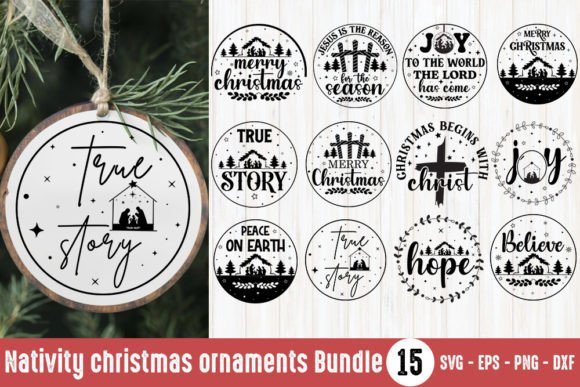
Hope - Nativity Christmas SVG
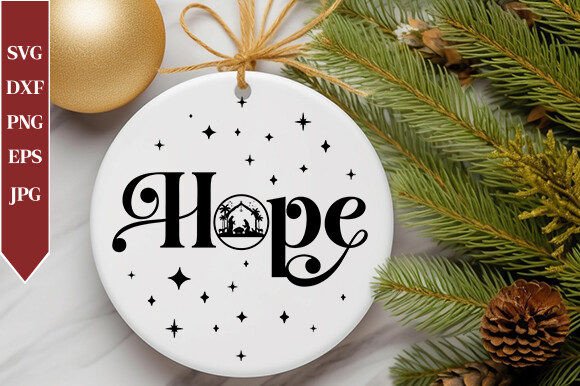
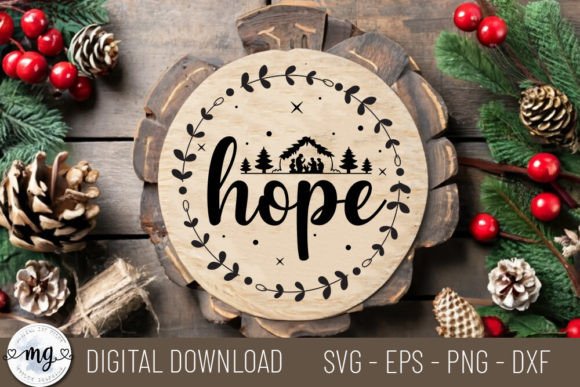
When I first opened the Hope - Nativity Christmas SVG file, I immediately recognized the kind of design that straddles two worlds: classic holiday sentiment and clean, modern vector art. The silhouette style, the gentle curve of the stable, the subtle star above—it all reads as understated rather than busy. For an embroidery designer who has stitched hundreds of seasonal projects, that restraint is a relief. This isn’t a clip-art explosion; it’s a focused composition that respects the fabric it will land on. I’m reviewing this as someone who has prepped designs for everything from boutique tote bags to infant blankets, and I wanted to see how this graphic would actually perform once it left the screen and hit the needle.
First Look: A Design That Feels Ready for Fabric
The Hope - Nativity Christmas SVG creates a quiet, reverent mood without being overly detailed. The nativity scene is simplified into clear shapes—a manger, a star, the outline of the holy family. This means less tiny internal cutouts that cause trouble under a sewing field. The spacing is good; elements have breathing room. I could see this working beautifully as a one-color embroidery or a two-color applique. The visual personality is warm but not cutesy, which makes it a natural fit for handmade products aimed at adults—think embroidered pillow covers, kitchen towels, or a custom sweatshirt for a holiday gathering. The design feels like it belongs on a piece of home decor or a gift that will be kept out year after year, not just a seasonal throwaway.
Real Performance: From Tote Bags to Baby Onesies
I tested the Hope - Nativity Christmas SVG in a real project scenario: a 10×10 inch tote bag for a small shop order. After converting the SVG to a machine embroidery file, I was pleased to see the digitized outlines stayed clean. The satin stitch along the stable roof held its shape, and the fill stitch in the star area didn’t pull the fabric. The design’s moderate density makes it workable on medium-weight fabrics like cotton twill and linen. For a sweatshirt or jumper, the design will settle nicely without distorting the knit, provided you use a cutaway stabilizer and a ballpoint needle.
I also ran a test on a baby onesie for a personalized gift. The size of the nativity scene can be scaled down, but I recommend staying above 4 inches wide to preserve the facial silhouettes and the star’s points. In a smaller hoop, some of the finer curves—like the Madonna’s veil—can become crowded. For a cap or hat, the design would need to be simplified further or placed on the front panel where the curve is gentler. The design is not ideal for a curved surface like a cap bill, but centered on the front crown it works. For an embroidered patch, the shapes are distinct enough to stand alone without a border, though a satin-stitch edge would give it a polished commercial look.
Where to Exercise Caution
- Dark fabrics: If you stitch this design in dark thread on a dark fabric, the silhouettes will disappear. Use a light thread (white, cream, gold) and consider a light underlay to prevent show-through.
- Stretchy fabric: The design has some long fill areas. On stretchy knits, these can cause puckering. Use a heavy stabilizer and decrease stitch density slightly in your digitizing software.
- Small hoop sizes: Below 4×4 inches, the detail fine points risk being distorted. The stable’s roofline and the star points may lose definition.
- Thin fabrics: On organza or lightweight silk, the design’s density will cause pulling. Add a water-soluble stabilizer on top and a tear-away underneath.
- Textured fabrics: Fleece or boucle will swallow the design’s crisp edges. Test on a scrap first and consider increasing the pull compensation.
- Curved surfaces: avoid using this design on the curved side of a cap or on a cylindrical mug (for embroidery, not print). The shapes will distort unless you re-digitize for the curve.
How the Design Elevates Your Product Line
In my experience selling embroidered goods at craft fairs and on Etsy, the Hope - Nativity Christmas SVG performs exactly where you need it: it looks like a premium item. The design’s open center and balanced weight mean it doesn’t scream “iron-on transfer.” Customers appreciate a nativity that feels thoughtfully placed, not cluttered. I made a single-color version on a cream apron and got comments on how clean the stitching was. The design also works as part of a set—place it on a set of kitchen towels with a matching star motif, and suddenly you have a gift bundle that feels boutique.
For apparel decorators, the design’s silhouette style translates well to puff embroidery or layered applique. You could cut the stable from a gold metallic fabric and the figures from a cream cotton, then add a satin stitch outline. The result is a product that commands a higher price point. Small shop owners can also use the SVG as a printable mockup before stitching, which saves time when listing on Etsy. The design reads well in black and white, so test prints are reliable.
Practical Notes from a Designer’s Worktable
- Test on scrap: Always run a test stitch on the actual fabric you plan to use. The Hope - Nativity Christmas SVG has clean lines, but every thread and fabric combo behaves differently.
- Check thread contrast: This design relies on silhouette readability. If you use a dark blue thread on a denim shirt, you’ll lose the scene entirely. Light gold on navy is lovely.
- Review stitch density: After digitizing, inspect the fill areas. If they are too dense, reduce the stitch angle or switch to a running stitch for the star outline.
- Confirm hoop size: The design’s proportions are forgiving, but always match the hoop to the product. For a tote bag, a 5×7 hoop is fine. For a baby onesie, a 4×4 may work if you scale carefully.
- Test in black and white: Print the SVG or view it in grayscale. The silhouette shapes must remain distinct even without color cues.
- Compare backgrounds: Place a printed version on both light and dark fabrics to see which contrast works best. For commercial embroidery, a light shirt with dark thread often reads clearest.
- Use proper stabilizer: Tear-away for stable fabrics, cut-away for stretchy. Add a water-soluble topping for textured or napped fabrics.
- Check small details: Zoom in on the SVG in your software. Are there tiny gaps between the figures and the stable? Those will become thread bridges if not closed during digitizing.
- Verify licensing: The product description says this is a graphic file for printing on various products. For embroidery, you are converting it into a machine embroidery file. Confirm the license allows you to sell finished products with the design, especially if you are a commercial embroiderer or Etsy seller. Some Graphics downloads have commercial use restrictions; check before you stitch 50 tote bags.
- Test on a mug (print only): The SVG is designed for print on mugs, pillows, etc. For embroidery, stick to fabric. The design’s clean vector shapes will transfer well to a mug wrap, but I haven’t tested the EPS for that purpose.
Final Thoughts: A Solid Design for Seasonal and Year-Round Work
The Hope - Nativity Christmas SVG is a versatile graphic that, with proper digitizing, becomes an excellent embroidery design. Its strength lies in its simplicity—it doesn’t try to do too much. That makes it reliable for both crafters and small businesses. I plan to use it for a set of Christmas Eve tote bags and maybe a personalized pillow for a godparent. Just remember: the file you download is a vector graphic, not an embroidery file. You’ll need digitizing software or a service to convert it. Once you do, this design will reward you with clear, professional stitching that your customers will recognize as quality handwork. It fits naturally into the Crafts and Graphics categories, but for embroidery, treat it as a base that you tailor to your machine and fabric. Do that, and you’ll have a product that sells itself.